
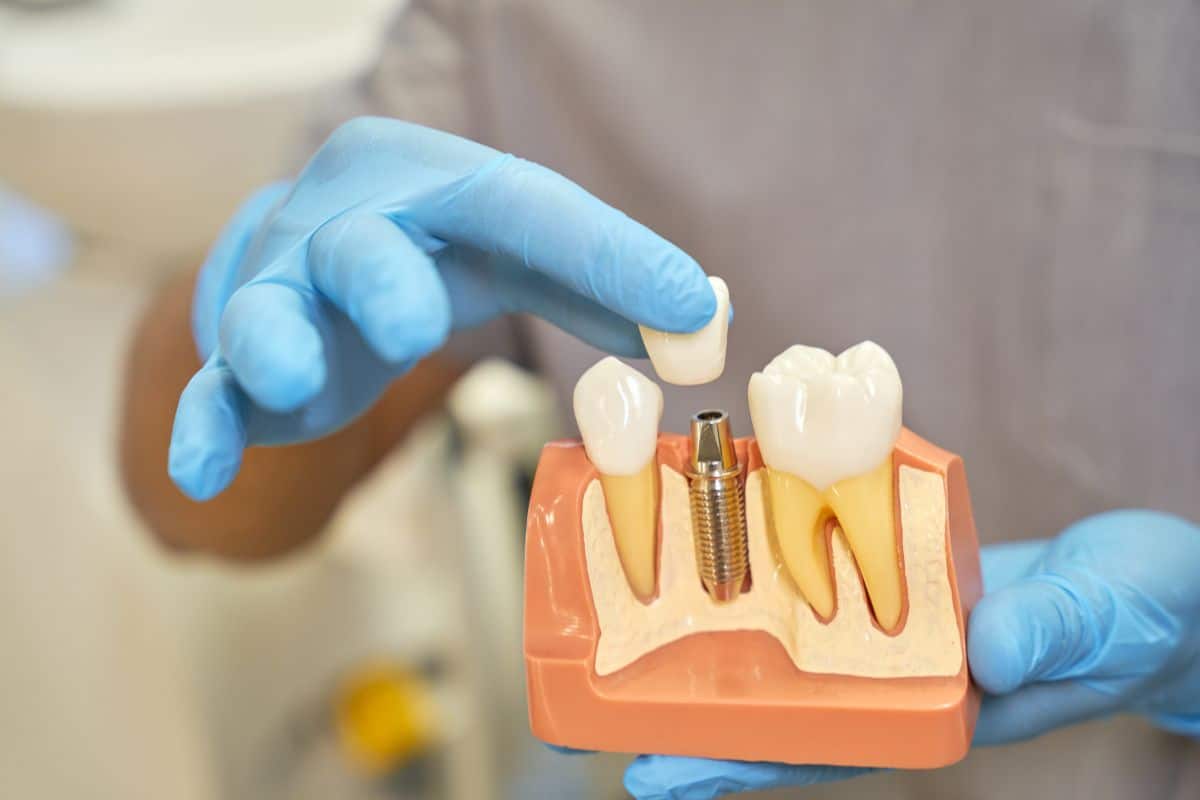
Considering dental implants? You’re joining a growing number of Americans choosing this highly successful tooth replacement option. In fact, projections suggest the prevalence of dental implants in the U.S. will soar to 23% by 2026.
But what happens when you experience persistent, nagging pain, particularly on the roof of your mouth (palate), after your new implant crown is placed? While minor discomfort is normal right after surgery, ongoing pain can be concerning. Could the way your teeth fit together—your bite alignment, or occlusion—be the culprit?
How common is pain after dental implants?
Mild post-operative pain is common and typically peaks on the first day. In patient surveys, most post-implant pain is mild and resolves quickly — one study reported pain peaking around 6 hours after surgery for many patients. Persistent or new pain weeks to months after implant placement is less common but well-documented and requires evaluation. Sensory changes after implant surgery (numbness, tingling, burning) have been reported in large series — transient sensory changes occurred in about 5.6% of patients in one pooled analysis.
(These numbers show most patients recover uneventfully, but a measurable minority experience lingering sensory symptoms or pain that needs follow-up.)
Why an improper bite can cause palatal (roof-of-mouth) pain after implants
There are several mechanical and biological pathways by which bite problems can produce palatal pain after implant therapy:
- Occlusal overload on the implant or opposing teeth
Implants lack a periodontal ligament, so they transmit forces differently than natural teeth. Excessive or uneven forces (occlusal overload) can damage the implant restoration, cause screw loosening, crack ceramic restorations, accelerate bone loss around the implant, or alter the way nearby teeth contact — all of which can create localized pain that a patient may perceive in surrounding areas (including the palate) when biting. Systematic reviews and narrative reviews highlight occlusal overload as a plausible contributor to mechanical and biological complications. - Traumatic contacts that create soft-tissue impingement
If the new prosthesis changes the bite, an opposing tooth or restoration may now contact soft tissue (for example, a lower tooth contacting the palate when biting or during excursive movements). This direct trauma can cause localized palatal soreness, ulceration, or inflammation. Clinical reports and dental practice guidance note that poorly fitting restorations or sudden occlusal changes can irritate the palate or other soft tissues. - Referred or neuropathic pain.
Occasionally, pain that seems to be “in the palate” is actually referred from surrounding structures (TMJ, muscles, adjacent teeth) or is a neuropathic pain developing after surgery. Case series describe chronic or neuropathic orofacial pain that began after implant surgery and presented weeks to months later. Such pain may be described as burning, shooting, or persistent soreness and often needs specialist evaluation. - Poor prosthesis design or surgical complications
Overbulky prosthetic contours, deficient emergence profiles, or a palatally extended flange on a denture/implant prosthesis can rub the palate. Also, undetected surgical complications (e.g., sinus or nasopalatine area irritation, soft-tissue lesions) can present with palatal discomfort. Case reports include palatal complaints related to adjacent pathology or prosthetic issues.
What the research says about occlusion, implants, and pain
- Reviews and clinical studies repeatedly identify occlusal overload as a mechanical risk factor that may contribute to implant complications (prosthetic failures, screw loosening, marginal bone loss). However, the exact cause-and-effect pathways and incidence rates are still debated. Good occlusal design and careful attention to contacts reduce these risks.
- Extensive clinical surveys show that most implant patients experience only mild, short-lived postoperative pain; persistent or neuropathic-type pain after implant placement is less common but recognized in the literature and case series. Early evaluation is recommended if pain persists beyond the expected healing window.
Signs that your bite may be causing the palatal pain
Watch for these red flags that suggest an occlusal or prosthetic cause (and warrant prompt review):
- New or sharp palatal pain that occurs on biting or with specific jaw movements.
- Pain that started after the final prosthesis was delivered (not only right after surgery).
- A feeling that “something hits” the palate when you chew or bring your teeth together.
- New ulcer or sore on the palate at the point of contact.
- Symptoms plus prosthetic issues: loosened screw, fractured ceramic, or a change in the way teeth meet.
If you have any of the above, schedule an urgent check with your implant dentist in Dublin.
What your dentist may do to diagnose the cause
A careful clinical and radiographic exam will usually narrow down the cause:
- Clinical occlusal analysis: articulating paper, shimstock, or digital occlusion analysis to identify high or premature contacts on the implant restoration or opposing teeth.
- Soft-tissue exam: look for palatal ulceration, sharp edges, or prosthetic impingement.
- Radiographs / CBCT: evaluate implant position, bone levels, proximity to anatomical structures (sinus, nasopalatine canal), and signs of peri-implantitis or bone loss.
- Prosthesis assessment: check for loose screws, fractured ceramic, overbulky contours, or ill-fitting flanges.
- Neuropathic pain screen: if the pain quality is burning/tingling and the exam is unremarkable, your dentist may refer you to an orofacial pain specialist.
How common problems are fixed (typical treatments)
- Occlusal adjustment: selective grinding or adjusting the bite on the implant crown or opposing teeth to eliminate traumatic contacts. This is often the first, least invasive fix.
- Prosthesis remounting or remake: if the restoration’s design is the problem (overbulky, wrong contour), remaking the crown/prosthesis or adjusting the contour can stop palatal rubbing.
- Screw tightening or component repair: loose parts can be repaired or replaced.
- Splinting or occlusal guards: Night guards or splints can protect implants from parafunctional forces (bruxism) while longer-term solutions are being planned.
- Orthodontic or surgical correction: In complex malocclusion cases where tooth position causes palatal trauma, orthodontics or orthognathic surgery may be needed.
- Referral for pain that looks neuropathic: persistent burning or neuropathic features may require medication and specialist management.
When to seek urgent care
Contact your dentist promptly if you have:
- Severe, worsening pain not controlled with medication.
- New swelling, fever, or drainage (possible infection).
- Numbness or persistent altered sensation.
- An open sore on the palate that bleeds or won’t heal.
Early assessment can prevent progression to prosthetic failure or worsening peri-implant disease.
Practical prevention tips (for patients getting implants)
- Choose a qualified implant dentist or prosthodontist who reviews occlusal factors during the planning and delivery phases.
- Ask about digital occlusal analysis and contact verification before final seating.
- If you grind your teeth, discuss night guard options before final restoration.
- Keep follow-up appointments — occlusal changes can occur as tissues settle and restorations wear; early adjustments are less expensive than remakes.
- Report any new bite sensations or palatal discomfort right away — early occlusal adjustment often resolves symptoms.
Conclusion
While dental implants boast exceptional longevity, they require meticulous planning and execution. If you experience persistent, intense, or worsening pain on the roof of your mouth after your implant crown has been placed, do not ignore it. It is crucial to have your qualified dentist in Dublin perform a thorough occlusal evaluation to check for any high spots or improper bite contacts.
Catching and correcting bite alignment issues early—often through a simple adjustment of the implant crown—can prevent significant complications such as bone loss, peri-implantitis, and even implant failure, which has been reported in approximately 5-10% of cases.
FAQs
- I have a sore roof of mouth when I bite after my implant crown was placed — is that from the implant?
Possibly. New or high occlusal contacts, a bulky restoration, or opposing tooth contacts can rub or traumatize the palate. Your dentist will check occlusal relationships and the prosthesis design — many cases are resolved with adjustments. - How often does occlusal overload cause implant failure?
The literature recognizes occlusal overload as a risk factor for mechanical complications (screw loosening, fracture) and possibly bone loss, but the exact incidence varies between studies. Careful occlusal design reduces the risk. - Could the pain be neuropathic rather than mechanical?
Yes — some patients develop persistent neuropathic pain after implant surgery. Neuropathic pain often feels burning, tingling, or electric and may persist despite regular exams; referral to an orofacial pain or neurology specialist may be needed. - What should my dentist check first when I report palatal pain?
They’ll check occlusal contacts (between the implant and opposing teeth), soft-tissue irritation on the palate, the fit and contour of the prosthesis, and imaging to rule out surgical complications or peri-implant issues. - Can a simple occlusal adjustment really fix palatal pain?
Often, yes. If the pain is caused by high or traumatic contact with the palate, selective adjustment of the crown or the opposing tooth usually relieves the problem quickly. More complex cases may require remaking the restoration or other interventions.